
Environmental information
 Circular Economy
Turning waste into value
In 2025, Lenzing advanced chemical recycling technologies for cotton-rich textile waste and prepared for processing post-consumer textiles, the next big challenge. Our collaboration with Södra on textile recycling has continued and remained successful throughout the year. A highlight in 2025 was production of Lyocell staple fiber with 30% recycled content from Circ Inc., which recovers both polyester and cotton from polycotton garment waste. We also explored alternative raw materials like hemp, banana fibers, and aquatic plants, keeping innovation at the heart of our sustainability journey.
More in the chapter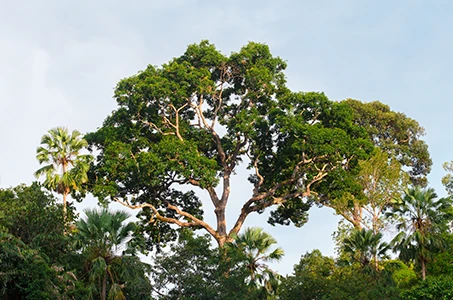 Biodiversity & Ecosystems
Growing nature conservation areas
In 2024, we surpassed our goal of 20,000 hectares of nature conservation area in Brazil. By 2025, we expanded to over 23,000 hectares, prompting us to increase our ambition to 24,500 hectares. This progress reflects our commitment to restoring ecosystems and driving positive change.
More in the chapter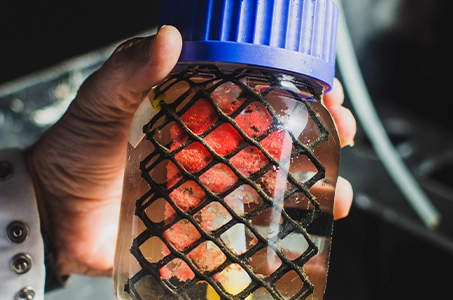 Circular Economy
Proven biodegradability
Scientifically confirmed: regenerated cellulose behaves like natural cellulose (e.g. cotton). A 2025 study by the Hydra Institute tested 122 scenarios across soil, compost, freshwater, and marine environments. The conclusion? Viscose, modal, and lyocell degrade as naturally as cotton. Environmental impact depends on product treatments, such as dyeing and finishing, not the fiber itself, reinforcing the sustainability of our cellulose fibers.
More in the chapter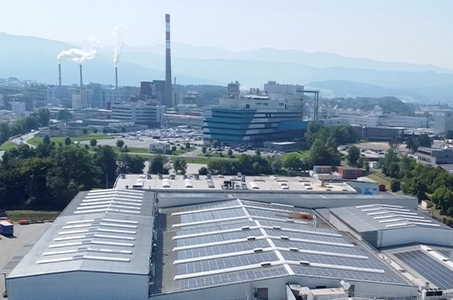 Climate Change
Driving Decarbonization
Seven out of nine production sites run on 100% renewable grid electricity. Despite current market challenges, we continue to position low-carbon fibers to help our customers to reduce their supply chain emissions. Aligned with the Paris Agreement and UN SDG 13, Lenzing is driving ambitious climate goals: 42% reduction in Scope 1 and Scope 2 greenhouse gas (GHG) emissions and 25% reduction in Scope 3 by 2030 (baseline 2021), as well as net‑zero GHG emissions by 2050.
More in the chapter