
Stakeholder management
[SBM-2 45a]
The complex global sustainability challenges that society faces today require collaborative action and the development of systemic solutions. Meaningful stakeholder dialog is therefore essential. This requires mutual respect, the sharing of knowledge and expertise and actively listening to partners’ perspectives. Effective engagement starts with transparent information, which enables stakeholders to form an educated opinion, assess risks, and build trust, thereby minimizing misunderstandings. Ongoing dialog occurs through a range of formats, including but not limited to meetings, working groups, responses to inquiries and surveys, conferences and other forms of exchange.
Key stakeholder groups
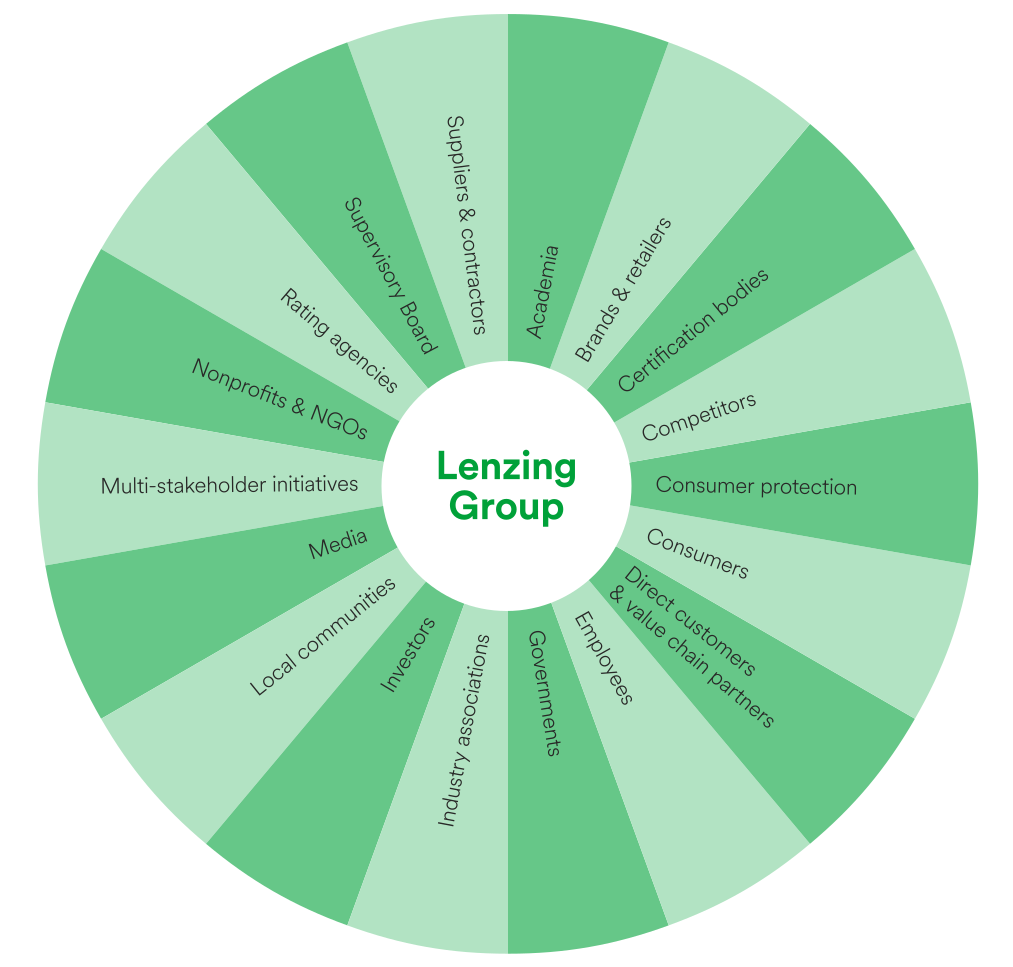
Key stakeholders
The main stakeholders involved in the engagement process are shown in figure “Key stakeholder groups”. The Lenzing Group’s key stakeholders are individuals or entities that may be affected by its operations, business conduct, and strategic targets or that are in a position to contribute to achieving these targets. Lenzing regards such stakeholders as strategic partners that have a significant interest in and impact on areas that matter the most to Lenzing. The most important stakeholder group are Lenzing’s employees. Their achievements, together with transparency and collaboration, are a clear testament to the Lenzing Group’s credible sustainability performance.
For further information on the main stakeholders, please see the “Stakeholder engagement” focus paper.
[SBM-2 45b]
For information on how the outcome of the stakeholder dialog is taken into account in the double materiality process, please see the “Double materiality analysis” section of this chapter.
Stakeholders |
Interested in |
|---|---|
Investors |
Return on investment, resilience, opportunities, risks |
Academia, media |
Negative (and positive) environmental impacts, best practice |
NGOs/NPOs/multi-stakeholder initiatives/industry associations |
Negative (and positive) environmental impacts, best practice, expertise, knowledge |
Suppliers |
Stable business, no risk of losing reputation when working with us |
Direct customers (e.g. spinners), indirect customers (brands, retailers) |
Reaching their goals/commitments; their Scope 3 emissions, certifications, audits, LCAs and product footprint, traceability, no value chain risks, innovation opportunities |
Own workforce |
Secure employment, health & safety, training & skills development |
Workers in the value chain |
Working conditions, measures against violence and harassment in the workplace, diversity, child & forced labor, adequate housing, water and sanitation, privacy |
Local communities |
Noise & odor |
End-consumers |
Product safety |
[SBM-2 45d]
The Supervisory Board and Managing Board receive partial information on the views and interests of affected stakeholders with regard to sustainability-related material impacts. The opinions of its own workforce are conveyed via the works council and the result of the Lenzing Climate survey. Feedback from consumers and end-users is gathered indirectly through Lenzing’s customers and communicated by Lenzing commercial teams. The views and interests of value chain workers (e.g. suppliers) are not actively communicated to the Boards.
Own workforce
[S1 ESRS 2 SBM-2]
The interests, views and rights of Lenzing’s workforce, including protection of their human rights, influence the strategy and business model. In alignment with its corporate culture, the Lenzing Group places people at the center of its strategic priorities, thereby forming an integral part of its holistic sustainability approach.
The corporate culture is built on long-term partnerships, close collaboration and mutual respect supported by open dialog and transparency. Employee interests are represented through established channels, including direct leadership engagement and dialog with employee representatives. These mechanisms enable the workforce to regularly contribute views on, and ensure shared understanding of business strategy, goals, performance, market conditions, the financial situation and policies as well as any matters relating to employment terms, conditions and benefits. For details on formats and exchange, please see the “Communication” section in the “S1 Own workforce” chapter.
Human rights, fair working conditions, equal opportunities, safety and well-being are reflected in Lenzing’s internal policies and form guiding principles for how we engage, manage and develop people. Compliance with these standards is supported through training, leadership accountability and monitoring activities.
To navigate current market volatility and prepare for future challenges, Lenzing introduced its People Plan in 2024. The strategic framework focuses on four key areas: organizational performance, diversity and culture, leadership development and talent management.
Workers in the value chain
[S2 ESRS 2 SBM-2]
The Lenzing Group supports globally recognized human rights and labor standards frameworks and does not tolerate violations of these principles. This commitment extends to safeguarding the rights of all workers within its sphere of influence, in alignment with the Universal Declaration of Human Rights, the UN Global Compact (UNGC), OECD Guidelines for Multinational Enterprises and the International Labour Organization’s (ILO) Declaration on Fundamental Principles and Rights at Work.
In relation to workers in the value chain, Lenzing primarily relies on information from credible external sources, including NGOs, NPOs, trade unions, risk databases and governmental reports, which are supplemented by internal expertise, to identify and assess impacts. Lenzing’s sphere of influence currently covers direct suppliers and to a lesser extent its downstream business partners involved in the distribution, transportation and storage of Lenzing products. At present, Lenzing’s influence is limited to reviewing working conditions through audits and relying on external ratings and standards such as the EcoVadis rating. Acknowledging potential adverse impacts of sourcing on value chain workers, Lenzing implements a sustainable sourcing strategy.