
Metrics
Energy and fuels
[voluntary information]
Lenzing’s absolute consumption of fossil energy decreased by 12 percent, while the use of renewable energy increased by 7 percent. The total energy consumption at the Group level slightly increased compared to the previous year. This change is largely due to a decrease of production at the Lenzing site in Purwakarta (Indonesia) in 2025.
Lenzing (Austria) |
Biomass, waste, natural gas and coal |
|---|---|
Heiligenkreuz (Austria) |
Biomass, biogas and natural gas |
Paskov (Czech Republic) |
Biomass, biogas and natural gas |
Grimsby (UK) |
Natural gas |
Mobile (USA) |
Natural gas |
Nanjing (China) |
Coal and natural gas |
Purwakarta (Indonesia) |
Coal and natural gas |
Prachinburi (Thailand) |
Biomass and coal |
Indianópolis (Brazil) |
Biomass and oil |
Energy sources
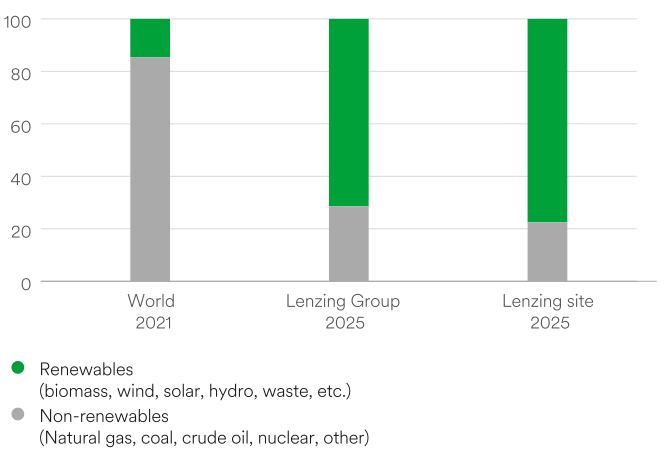
[E1-5 37, 38, 40]
Energy consumption in million megawatt hours (MWh) |
2025 |
2024 |
|---|---|---|
(1) Fuel consumption from coal and coal products |
1.44 |
1.89 |
(2) Fuel consumption from crude oil and petroleum products |
0.46 |
0.37 |
(3) Fuel consumption from natural gas |
1.59 |
1.60 |
(4) Fuel consumption from other fossil sources |
0.52 |
0.44 |
(5) Consumption of purchased or acquired electricity, heat, steam and cooling from fossil sources |
0.79 |
1.16 |
(6) Total fossil energy consumption (calculated as the sum of the lines 1 to 5) |
4.79 |
5.46 |
Share of fossil sources in total energy consumption (%) |
28.56 |
32.80 |
(7) Consumption from nuclear sources |
0.00 |
0.00 |
Share of consumption from nuclear sources in total energy consumption (%) |
0.00 |
0.00 |
(8) Fuel consumption for renewable sources, including biomass (also comprising industrial and municipal waste of biologic origin, biogas, renewable hydrogen, etc.) |
10.96 |
10.14 |
(9) Consumption of purchased or acquired electricity, heat, steam and cooling from renewable sources |
1.03 |
1.02 |
(10) Consumption of self-generated non-fuel renewable energy |
0.00 |
0.00 |
(11) Total renewable energy consumption (calculated as the sum of the lines 8 to 10) |
11.99 |
11.16 |
Share of renewable sources in total energy consumption (%) |
71.44 |
67.20 |
Total energy consumption (calculated as the sum of lines 6 and 11) |
16.79 |
16.63 |
Energy intensity based on revenue from activities in high climate impact sectors (MWh/EUR) |
0.0065 |
0.0063 |
[E1-5 39]
Energy production in million megawatt hours (MWh) |
2025 |
|---|---|
Renewable energy |
8.99 |
Non-renewable energy |
3.28 |
Total energy production |
12.27 |
For a description of the minimum disclosure requirements of the metrics “energy consumption”, “energy production” and “energy intensity”, the high climate impact sectors and the line item in the financial statement used to calculate the energy intensity. Please see the “Accounting principles” section of this chapter.
Lenzing’s greenhouse gas emissions
Lenzing’s carbon footprint
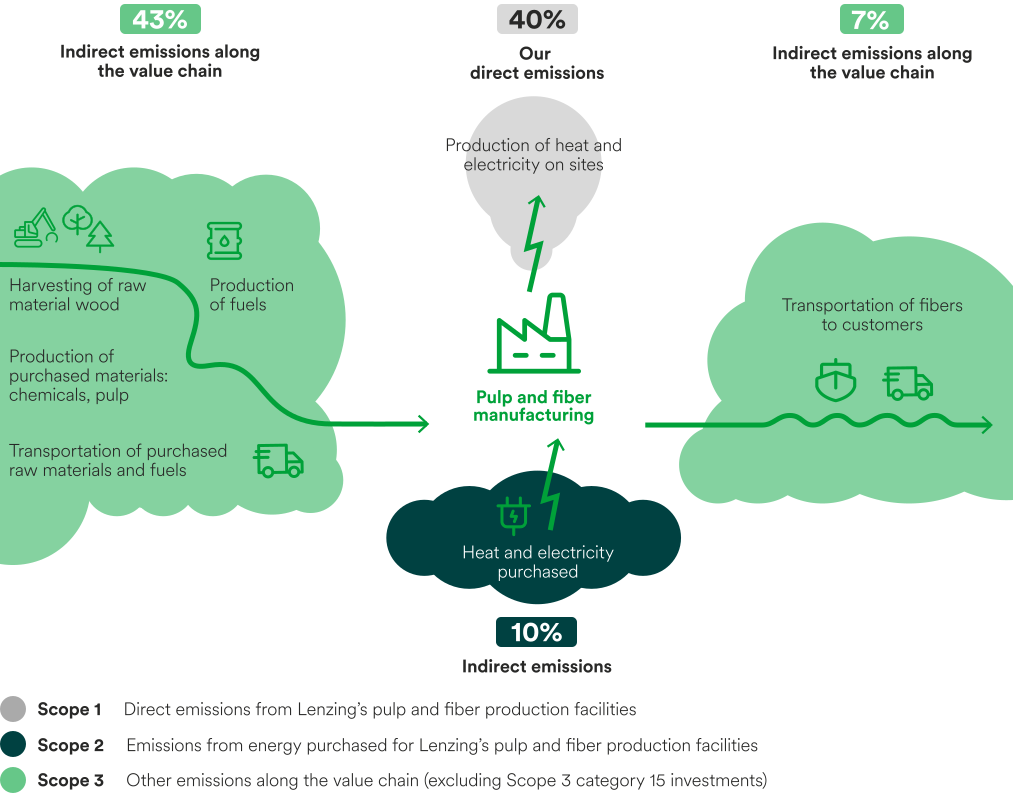
Changes over time
[voluntary information]
Lenzing’s absolute Scope 1 and 2 GHG emissions decreased by 0.27 million tons (16 percent) year on year. This is mainly due to the decrease of fossil energy, as explained in the “Energy and fuels” section.
Lenzing’s absolute Scope 3 GHG emissions decreased by 0.09 million tons (6 percent) year on year, mainly due to lower volumes of fuel and energy-related activities as well as reduced upstream transportation and distribution. This was primarily driven by the lower production volume at the Purwakarta (Indonesia) site and the partial switch from coal to natural gas at the Nanjing (China) site.
[E1-6 44, 48, 49, 50, 51, 52; E1-6 AR 39b, AR 43c, AR 45d, AR 45e]
|
|
|
|
Retrospective |
|||||||||||||||
|---|---|---|---|---|---|---|---|---|---|---|---|---|---|---|---|---|---|---|---|
Absolute emissions in million metric tons CO2 eq. |
2017 |
2021 |
2025 |
2024 |
relative change |
||||||||||||||
Scope 1 GHG emissions |
|
|
|
|
|
||||||||||||||
Gross Scope 1 GHG emissions2 |
1.33 |
1.24 |
1.15 |
1.28 |
−11% |
||||||||||||||
% of Scope 1 GHG emissions from regulated emission trading schemes (%) |
23 |
20 |
28 |
15 |
34% |
||||||||||||||
Scope 2 GHG emissions |
|
|
|
|
|
||||||||||||||
Gross location-based Scope 2 GHG emissions |
|
|
0.69 |
0.80 |
−13% |
||||||||||||||
Gross market-based Scope 2 GHG emissions3 |
0.63 |
0.53 |
0.27 |
0.40 |
−32% |
||||||||||||||
Total gross Scope 1 and Scope 2 GHG emissions (market-based)4, 5 |
1.96 |
1.77 |
1.42 |
1.69 |
−16% |
||||||||||||||
Significant Scope 3 GHG emissions |
|
|
|
|
|
||||||||||||||
Total gross indirect Scope 3 GHG emissions6 |
1.96 |
1.88 |
1.45 |
1.54 |
−6% |
||||||||||||||
C1: purchased goods and services |
1.35 |
1.31 |
0.88 |
0.92 |
−4% |
||||||||||||||
C3: fuel- and energy-related activities |
0.30 |
0.28 |
0.20 |
0.25 |
−20% |
||||||||||||||
C4: upstream transportation and distribution |
0.12 |
0.11 |
0.12 |
0.14 |
−11% |
||||||||||||||
C9: downstream transportation |
0.12 |
0.12 |
0.20 |
0.19 |
2% |
||||||||||||||
C15: investments |
0.07 |
0.06 |
0.05 |
0.04 |
7% |
||||||||||||||
Total Scope 1, 2, 3 GHG emissions |
|
|
|
|
|
||||||||||||||
Total GHG emissions (location-based) |
|
|
3.29 |
3.62 |
−9% |
||||||||||||||
Total GHG emissions (market-based) |
3.92 |
3.65 |
2.87 |
3.23 |
−11% |
||||||||||||||
Total biogenic CO2 emissions, Scope 1 |
|
1.74 |
3.55 |
3.29 |
8% |
||||||||||||||
Total biogenic CO2 emissions, Scope 2 |
|
|
0.20 |
0.19 |
2% |
||||||||||||||
Total biogenic CO2 emissions, Scope 37 |
|
|
0.88 |
0.92 |
−4% |
||||||||||||||
|
|||||||||||||||||||
[E1-6 53, 54]
Total GHG emissions1 in metric tons CO2 eq. per revenue (t CO2 eq./EUR) |
2025 |
2024 |
relative change 2025 to 2024 |
||
|---|---|---|---|---|---|
GHG emissions intensity (location-based) |
0.00127 |
0.00136 |
−7% |
||
GHG emissions intensity (market-based) |
0.00110 |
0.00121 |
−9% |
||
|
|||||
[E1-4 34a, 34b, 34c, 34d, MDR-T 80b, 80d, 80e]
Absolute emissions of target scope2,3 (SBT) in million metric tons CO2 eq. and absolut emissions index4 |
2017 |
2021 |
2025 |
2024 |
Near-term SBT 20304 |
Long-term SBT 20504 |
||||||||
|---|---|---|---|---|---|---|---|---|---|---|---|---|---|---|
Absolute Scope 1 and 2 GHG emissions |
1.96 |
1.77 |
1.42 |
1.69 |
1.03 |
|
||||||||
Absolute Scope 3 GHG emissions |
1.89 |
1.82 |
1.40 |
1.49 |
1.37 |
|
||||||||
Absolute Scope 1, 2 and 3 GHG emissions |
3.85 |
3.59 |
2.82 |
3.18 |
|
0.36 |
||||||||
Scope 1 and 2 index |
111% |
100% |
80% |
95% |
58% |
|
||||||||
Scope 3 index |
104% |
100% |
77% |
82% |
75% |
|
||||||||
Scope 1, 2 and 3 index |
107% |
100% |
79% |
89% |
|
10% |
||||||||
|
||||||||||||||
Specific emissions2,3 in metric tons CO2 eq. per ton of fiber & pulp produced and index4 |
2017 |
2021 |
2025 |
2024 |
Target 20254 |
Target 20264 |
Target 2027 |
||||||||||
|---|---|---|---|---|---|---|---|---|---|---|---|---|---|---|---|---|---|
Specific Scope 1, 2 and 3 emissions |
2.59 |
2.38 |
1.34 |
1.49 |
|
|
|
||||||||||
Specific Scope 1, 2 and 3 emissions index (2017 = 100%) |
100% |
92% |
52% |
58% |
55% |
53% |
50% |
||||||||||
|
|||||||||||||||||
Accounting principles
[E1-5 MDR-M, E1-6 MDR-M]
[MDR-M 77a]
Production sites report energy and fuel input data, as well as emissions factors and calorific values to the Group database on a monthly basis. Energy and GHG accounting at both site and Group level follows the GHG Protocol and ESRS E1 requirements. The reporting scope includes production sites and excludes stand-alone offices, as their emissions are not relevant. Offices that are part of a reporting unit with commercial production are included. The accounting principles are disclosed using ESRS terminology.
[MDR-M 77a]
Calorific values und emissions factors used by EU sites are the same as those applied under the EU Emission Trading Scheme. Non-EU sites may use measured emission factors or literature values according to local legal requirements. Otherwise, references to the Intergovernmental Panel on Climate Change (IPCC) are used.
[MDR-M 77a]
Energy consumption for Lenzing’s own operations is measured as the input of purchased electric power, heat (steam) and fuels. Monitoring is based on meter readings or invoices that quantify fuels directly. Fuel quantities are multiplied by calorific values to calculate energy consumption (in MWh). The metrics for non‑renewable and renewable energy production include steam and electricity after turbines and are based on estimates classified as accuracy level 3 (rough estimate), consistent with the data quality classification described in the Scope 3 section.
[E1-5 42, 43, MDR-M 77a]
Energy intensity is calculated as Lenzing’s total energy consumption per revenue from activities in high climate-impact sectors. These sectors entail the manufacturing of man-made cellulose fibers and dissolving wood pulp. The revenue used for this calculation is shown in the table “Revenue from external customers by products and services” in the notes of the financial statements, using the sum of the line items “Division Fiber” and “Division Pulp” is used. Energy consumption of the revenue category “Others” was not excluded, as its impact on the indicator is not significant. “Others” mainly includes central headquarters functions, overarching activities, and the Bildungszentrum (BZL), Lenzing’s training and personnel development center. An error occurred in the report 2024 when displaying the unit for energy intensity. The unit presented was mn MWh/EUR instead of MWh/EUR.
[MDR-M 77a]
Scope 1 includes direct GHG emissions at Lenzing’s production sites. These are calculated by multiplying the quantity of the fuel consumed by suitable emission factors.
[E1-6 AR 45d, MDR-M 77a]
Scope 2 refers to all indirect GHG emissions related to the generation of acquired electricity and heat (Lenzing does not use external cooling energy). All consumed energy is monitored by meter readings or invoices.
Location-based accounting involves multiplying the energy consumed from the public grid by relevant location-based emission factors. These factors typically reflect residual mixes and are obtained from the IPCC 2021 GWP100 V1.02 (country and regional data). Market-based accounting takes the energy source of purchased electricity and heating as well as the corresponding emission factors into consideration. This information is provided by energy suppliers or public traders and substantiated by Energy Attribute Certificates, such as Guarantees of Origin or Renewable Energy Certificates (REC). Supplier-specific emission factors are applied for purchased steam and electricity at the Prachinburi (Thailand) and Grimsby (UK) sites, as well as steam at the Nanjing (China) site. These factors are based on respective regulations and methodologies developed by the IPCC. The market-based approach is used for calculating Scope 2 GHG emissions that are relevant for the target scope.
[ESRS 2 BP-2 10, E1-6 AR 46i, MDR-M 77a]
Scope 3 covers all other indirect GHG emissions within the accounting scope. Lenzing identified five significant categories out of 15 defined by the GHG Protocol, as listed in the table “Absolute greenhouse gas emissions of the Lenzing Group”. The SBT scope includes Categories 1, 3, 4 and 9 but excludes Category 15 (97 percent of Scope 3 covered by target). The relevant Scope 3 categories have an estimation accuracy of 2: calculation/exact estimate (1 – exact figure, 2 – calculation/exact estimate, 3 – rough estimate). An exact estimate is based on reliable, readily available data (e.g. from a recognised database), whereas a rough estimate is based on incomplete or generic information, and therefore only provides a rough approximation.
[E1-6 AR 46h, MDR-M 77a]
Scope 3 Category 1: Lenzing’s purchased goods and services are calculated using the supplier-specific method and the average-data method. Supplier-specific data amounts to 43 percent of Scope 3 Category 1 emissions. These goods and services are divided into three subcategories:
Wood harvesting and forestry operations: calculations are based on volumes of externally supplied round wood multiplied by Ecoinvent emission factors.
Purchased external pulp: calculations are based on purchased volumes and supplier LCA data.
Purchased chemicals: calculations are based on volumes of purchased chemicals multiplied by generic emission factors from Ecoinvent and, where available, data provided by suppliers.
Scope 3 Category 3: indirect fuel- and energy-related activities (not included in Scope 1 or Scope 2) are calculated using average emission factors. GHG emissions generated upstream during extraction and processing of fuels (coal, natural gas, biomass etc.) are derived from fuel consumption and Ecoinvent emission factors.
Scope 3 Category 4: Lenzing’s upstream transport includes logistics operation for purchased external pulp, round wood and purchased chemicals. The distance-based method was applied. Transport volumes, transport routes and transportation modes are obtained from the ERP logistics system. Emission factors are derived from EcoTransIT.
Scope 3 Category 9: Lenzing’s downstream transport includes fiber and pulp sold as well as by-products (sodium sulfate, acetic acid, furfural, soda etc.). The distance-based method was applied. Transport volumes, transport routes and transportations modes are obtained from the ERP logistics system. Emission factors are derived from EcoTransIT.
Scope 3 Category 15: for Lenzing’s equity investments, calculations are performed using the investment-specific method. Publicly available data, such as sustainability reports or the EU ETS register, are used.
The following Scope 3 categories are relevant but not material: Category 2 (capital goods), Category 5 (waste generated in operations), Category 6 (business travel), Category 7 (employee commuting) and Category 8 (upstream leased assets). For this reason, these categories are excluded from the inventory.
[E1-6 AR 46i, MDR-M 77a]
Scope 3 Category 10 (processing of sold products): in line with the GHG Protocol Scope 3 guidance, Lenzing excluded this category from the inventory. As a producer of intermediate products, the company has no visibility into over the processing methods applied by downstream users. The GHG emissions associated with further processing vary significantly depending on the processor’s technology, energy source, location and setup. Given this wide variability, it is consequently not feasible to estimate GHG emissions associated with this category. Lenzing also does not exert operational or financial control or influence over the facilities in this category with regard to emission reductions.
The following Scope 3 categories are not relevant: Category 11 (use of sold products), Category 12 (end-of-life treatment of sold products), Category 13 (downstream leased assets) and Category 14 (franchises).
[E1-6 55, MDR-M 77a]
GHG emissions intensity is based on total location-based and market-based GHG emissions and revenue as reported in the consolidated financial statements. This refers to the line item “Revenue as per consolidated income statement”. For the revenue used in this calculation, please refer to the table “Revenue from external customers by products and services” in the notes of the financial statements. An error occurred in the report 2024 when displaying the unit for GHG emissions intensity. The unit presented was mn t CO2 eq./EUR instead of t CO2 eq./EUR. Likewise an error occurred in the report 2024 when displaying the unit for specific GHG emissions. The unit presented was mn t CO2 eq./t instead of t CO2 eq./t.
External assurance provider
[MDR-M 77b]
The metrics reported in the sections “Energy and fuels” and “Lenzing’s greenhouse gas emissions” are not subject to additional external verification other than the assurance provider.
Recalculation of 2017 and 2021, Scope 1 GHG emissions
[ESRS 2 BP-2 13]
The recalculation of Scope 1 GHG emissions for 2017 and 2021 in 2024 is due to a regulatory change at the Lenzing site in Austria. Previously, the fossil share of external waste burned at the site was estimated, but is now based on direct measurements. As the measured fossil share is higher than the initial estimate, this increases the fossil Scope 1 GHG emissions and proportionally reduces the biogenic Scope 1 GHG emissions by around 160 to 170 kilotons of CO2 eq..